Mi foto personal

Hi I'm Franco!

And I'm an Electrial Engineeer Student

I’m deeply passionate about exploring new ideas through mathematics, art, music, and especially technology. I thrive in collaborative environments where I can work on meaningful projects, constantly learn, and share knowledge with others. I enjoy transforming complex concepts into clear, engaging content, and I bring creativity, curiosity, and a strong desire to teach and grow alongside a team.

Download my CV

A little bit about my life

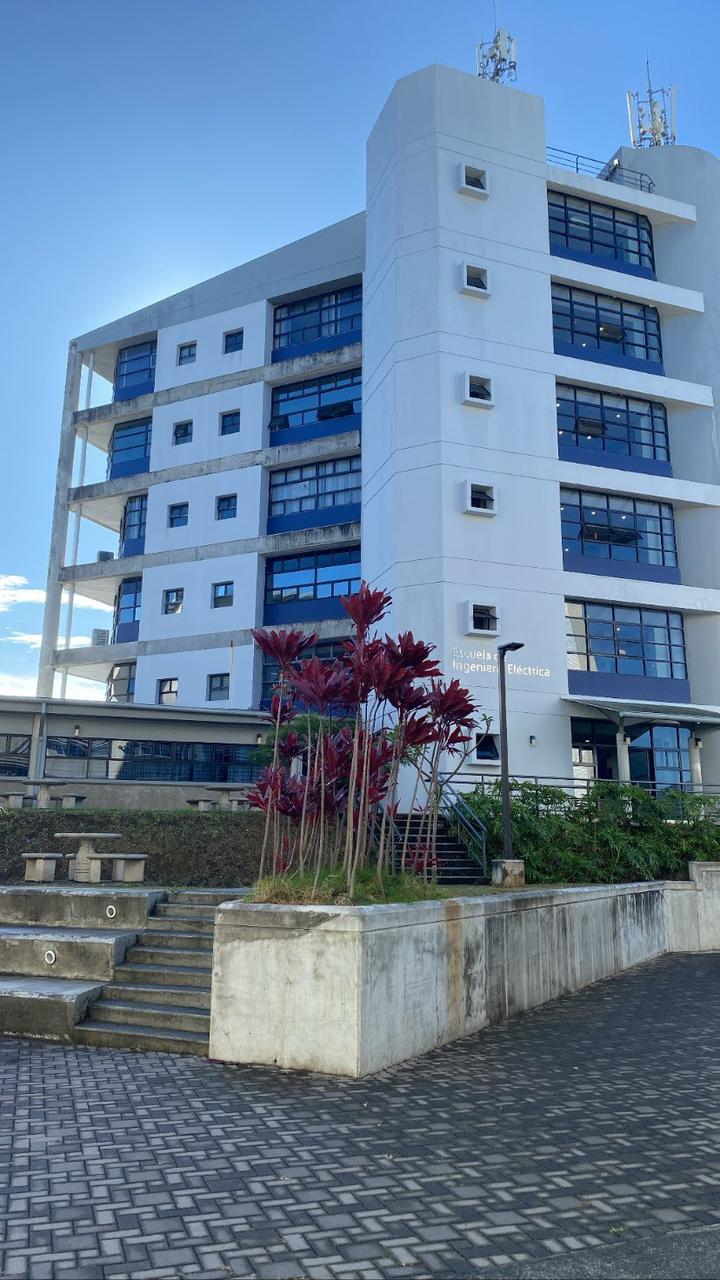
Escuela de Ingeniería Eléctrica

This is the School of Electrical Engineering!

The School of Electrical Engineering has been the place where I’ve grown both personally and professionally. It’s where I’ve spent countless hours learning, exploring, and building meaningful friendships. Throughout this journey, I’ve developed a strong foundation in programming, electronics, and systems thinking—skills that have not only shaped my identity as an engineer but also revealed my passion for blending technical knowledge with creativity and collaboration.

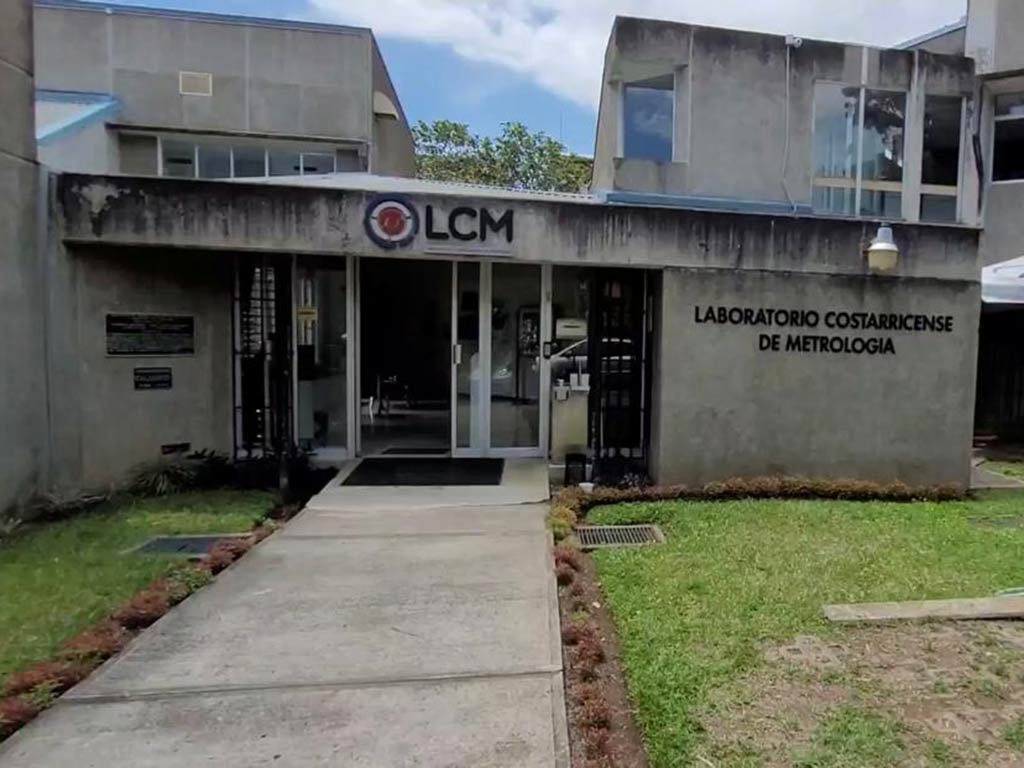
Laboratorio LACOMET

I Love Science — And Every Great Scientist Does Research!

Since the return to in-person classes in 2022, I have been actively involved in research laboratories at the university. As a dedicated science enthusiast, I never wanted to limit myself to theory alone. Instead, I embraced the opportunity to expand my knowledge by applying it in practice—conducting hands-on research, experimenting with instrumentation, and collaborating with fellow researchers. These experiences have not only allowed me to solve real-world challenges but have also fueled my continuous passion for discovery and innovation.

Universidad Rice

An International Learning Experience with Rice University

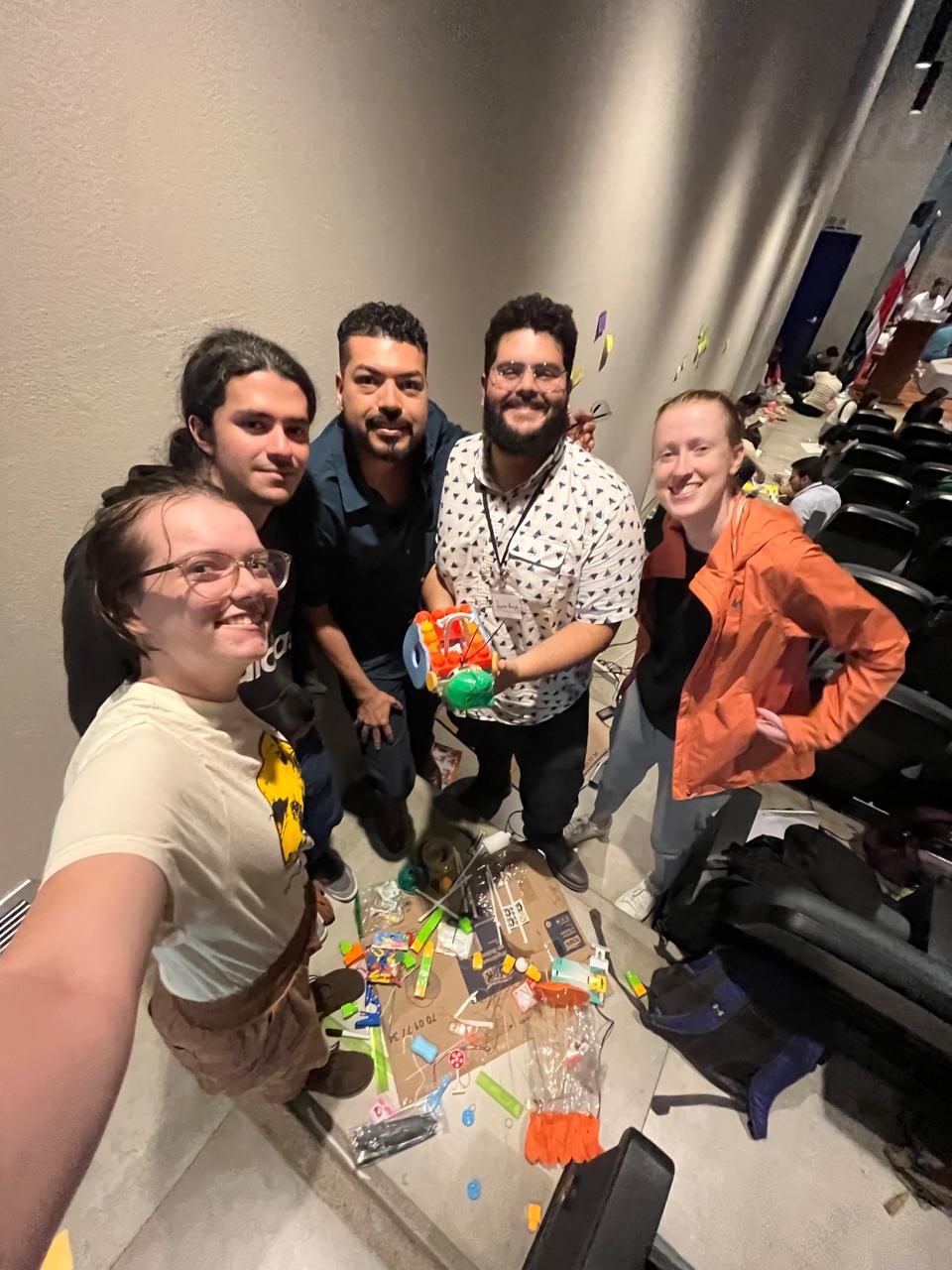
In 2023, thanks to my contributions to a biomedical engineering research lab, I was selected to participate in two international bootcamps in collaboration with Rice University. These intensive programs focused on real-world problem solving and challenged me to think creatively, work under pressure, and collaborate across cultures. Beyond the technical skills I gained, these experiences expanded my perspective on innovation and reaffirmed my passion for using engineering to make a meaningful impact.

UV Sterilization Box Prototype

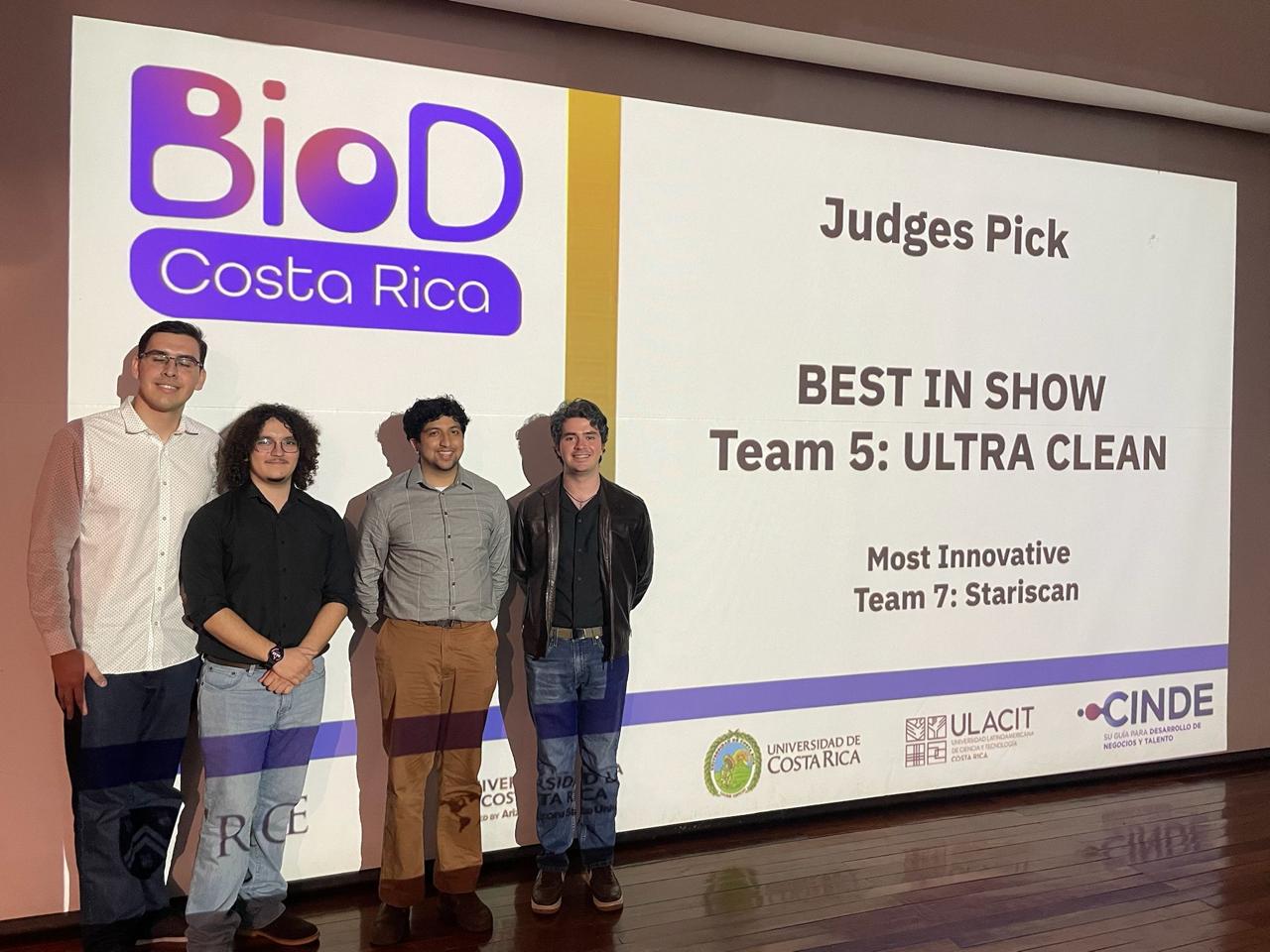
Biomedical Innovation Bootcamp 2025

In 2025, I returned to Rice University's Biomedical Innovation Bootcamp, where I collaborated with a multidisciplinary team to develop a functional prototype addressing a critical need in the medical field. Working together with great synergy, we designed a low-cost UV sterilization box specifically for ultrasound transducers, aiming to enhance infection control in clinical environments. Our project was awarded “Most Innovative Prototype” for its practical approach, technical soundness, and potential impact. This experience strengthened my passion for creating meaningful biomedical solutions through teamwork and hands-on innovation.

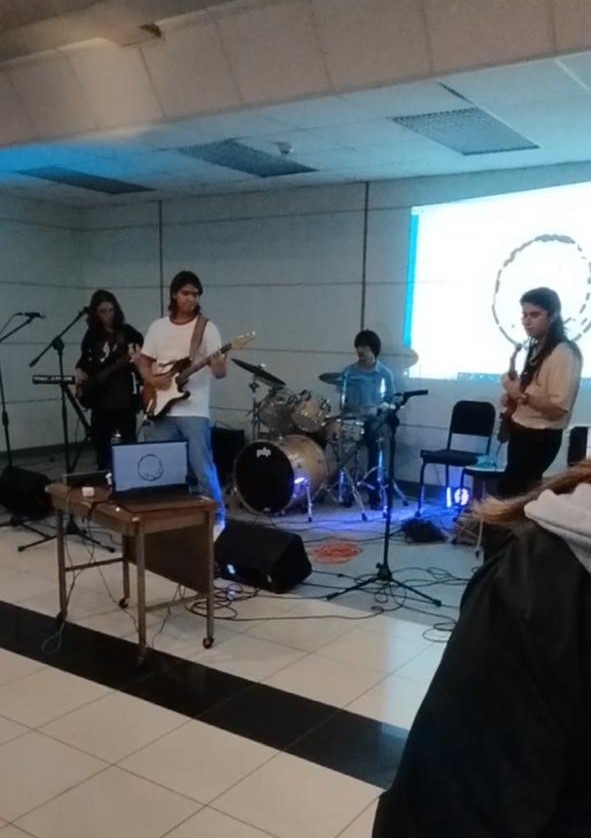
Yo tocando guitarra

Combining Art and Technology!

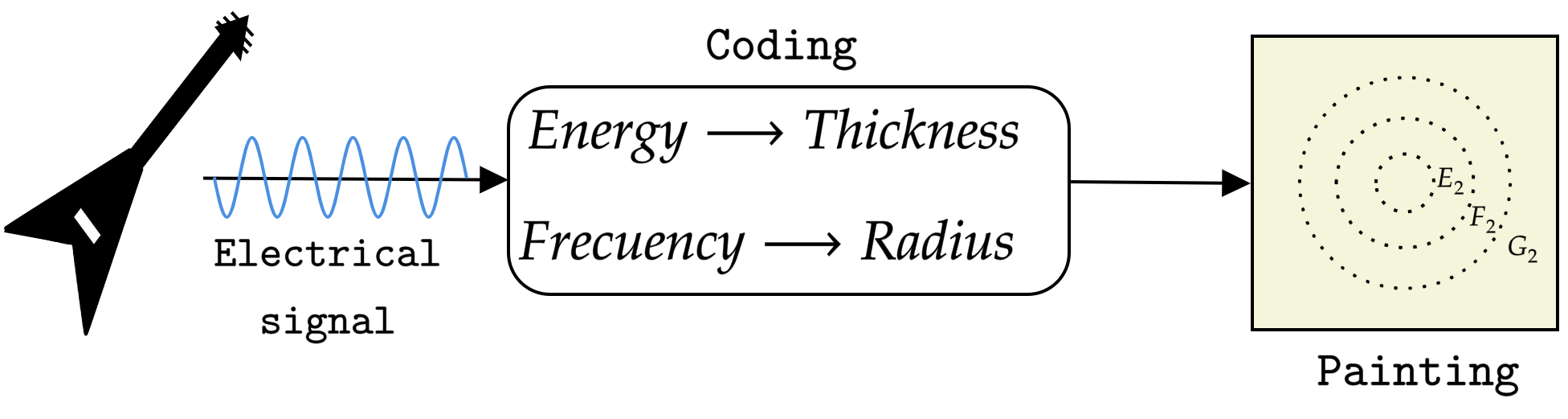
Engineering is also a form of art! As an artist, one of my most fulfilling experiences has been merging creativity with technology through hands-on projects. During Electrizarte, a lab designed for this purpose, I developed a prototype that captures the frequency and energy of a guitar and transforms it into real-time visual art. I’ve showcased this in live performances and used it as a tool to inspire children to explore science from a more creative and engaging perspective.

Acción social

Engineering with Purpose

A professor once told us that as electrical engineers, there would never be a lack of food on our table—and for that reason, we should always find time to give back. Since then, volunteer work and community outreach have become essential parts of my journey. These experiences have made me more human, more mature, and more aware of the world around me. I’ve led social impact projects focused on recycling and sustainability, and I’ve had the privilege of inspiring elementary school children to explore STEM careers by sharing engineering concepts in a fun and engaging way.g

What’s inside my brain?

Creativity

To me, creativity isn’t limited to the arts—it’s the foundation of originality and innovation. In engineering, it’s what allows us to think differently, connect ideas, and find new ways to solve problems. After all, “ingenio” is at the heart of engineering.

Problem Solving

I see every problem like a puzzle. I may not know the answer right away, but I enjoy the process of figuring it out step by step—especially when I get to learn something new in the process.

Technical Skills

The School of Electrical Engineering has done an excellent job grounding me in both hardware and software. Thanks to this foundation, I feel confident moving between electronics, programming, and systems design—bridging the gap between theory and practical implementation.

Documentation

Writing is also a form of art! Depending on the audience, a document should be written in very different ways. That’s why I always try to balance technical precision, clarity of ideas, and logical flow—while also making sure the result is visually appealing. To me, good documentation is about making complex ideas accessible, structured, and even enjoyable to read.

Every great document should be accompanied by clear, visually appealing figures. Throughout my academic journey, I’ve discovered two tools that I feel especially comfortable with: MATLAB for generating scientific graphs and LaTeX with the TikZ library for creating detailed illustrations. That said, I’m always open to learning new tools that help communicate ideas more effectively.

MATLAB example

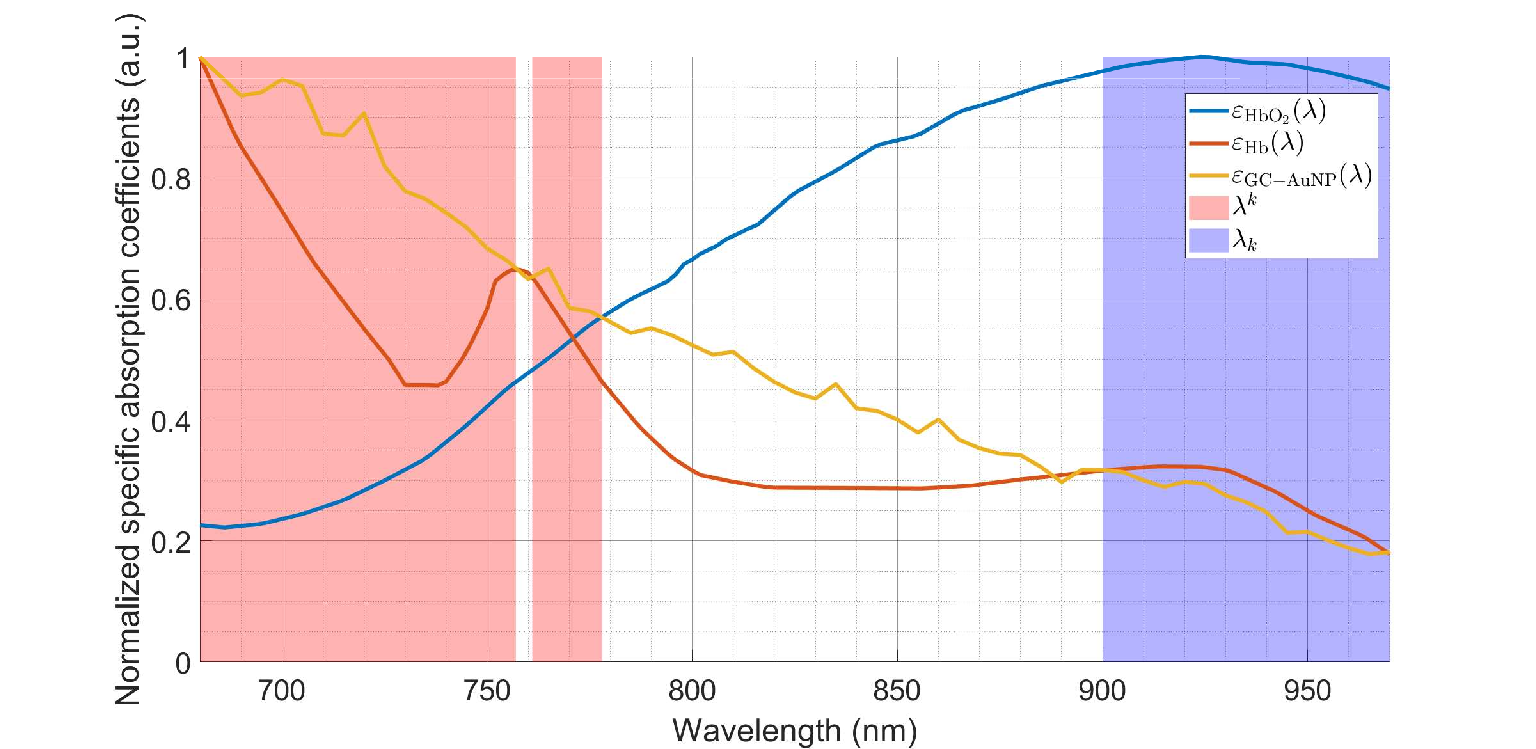
This figure shows how different chromophores absorb light across various wavelengths—a central aspect of my research on cancer detection through light-based imaging. Generated with MATLAB.

LaTeX example

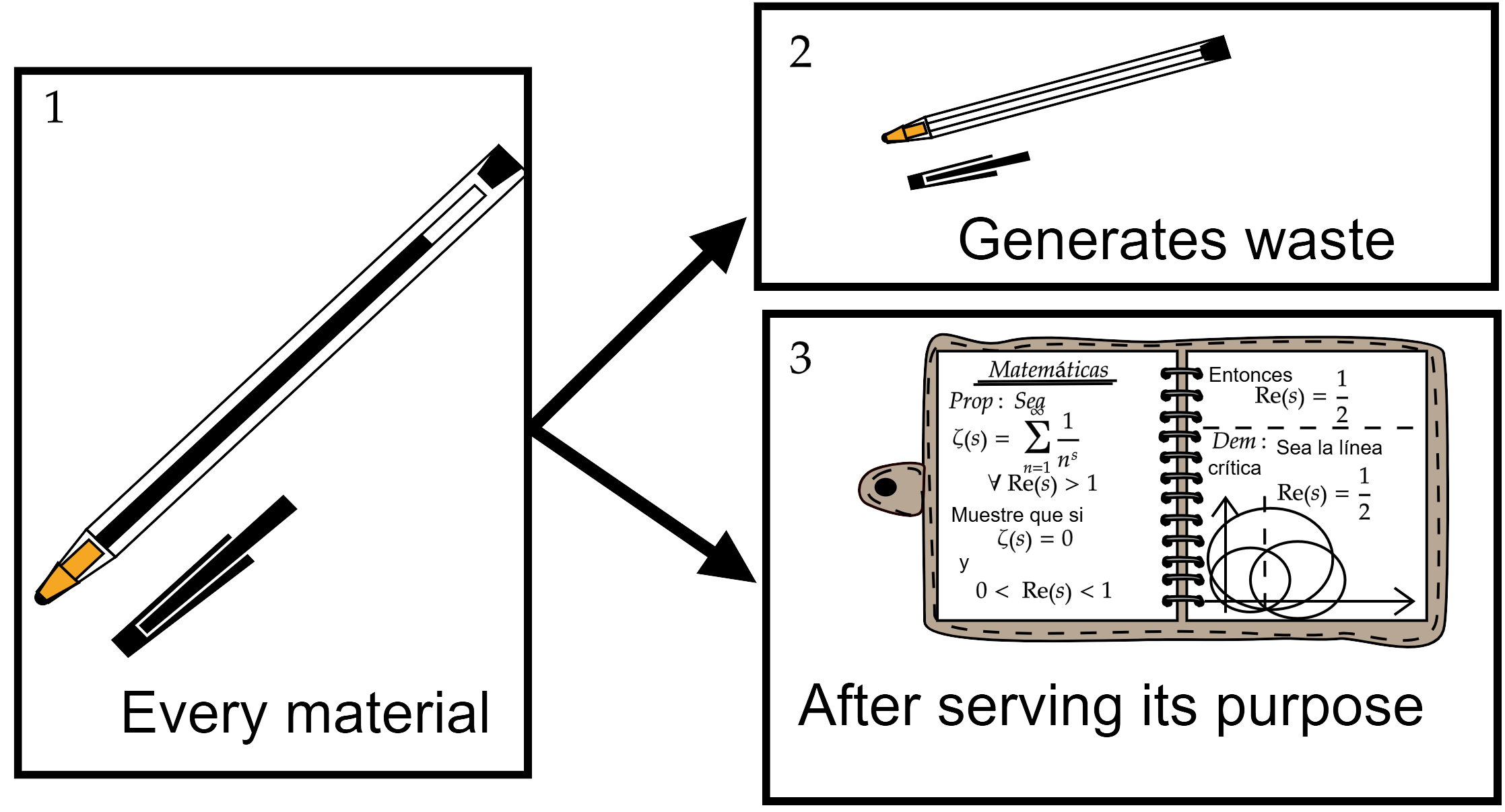
TikZ diagram illustrating a simple example used in my 3Rs project: every object—like a pen—generates waste after serving its purpose, reinforcing the idea that sustainability starts with awareness.

Biomedical Project: Gold, Lasers, and Cancer Detection

A little bit of context

Detecting cancer sounds like a weird and difficult task, right? And it certainly is. But what if I told you that it might be possible using gold particles smaller than a speck of dust and laser beams like the ones in Star Wars? It may sound like science fiction, but it’s a real possibility thanks to the combination of nanotechnology and physics.

How can something so tiny and invisible to the naked eye help us fight one of the world’s deadliest diseases? To convince you, I’ll walk you through the process step by step— and the best part? No math required!

Gold plays a key role in this process. While detecting cancer cells can be challenging, gold is much easier to detect—thanks to its properties as a metal (though we’ll dive into this a bit more later). Cancer cells are extremely small, so the first step is to break down the gold into a size so tiny that it’s measured in billionths of a meter. These minuscule gold particles are what we call gold nanoparticles[1].
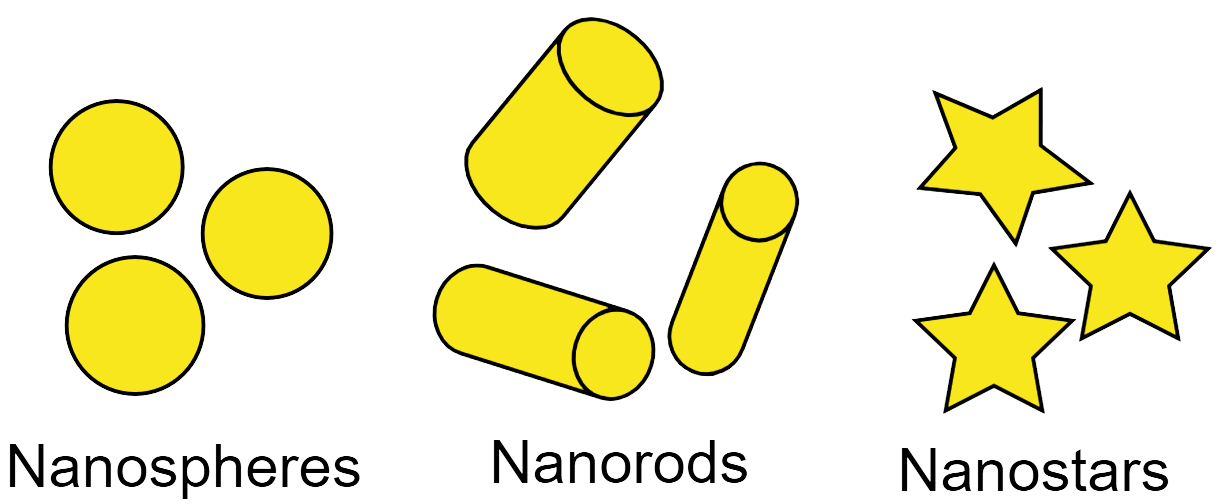
Gold nanoparticles shapes

There are countless ways to synthesize gold nanoparticles, and they have many applications beyond cancer detection.[1], [2].

Once we’ve broken the gold down into tiny nanoparticles, the next step is to get them to stick to the cancer cells somehow. To do this, some brilliant scientists came up with the wonderful idea of creating a coating for the nanoparticles, which contains antibodies that make the coating stick to the cancer cells[3].
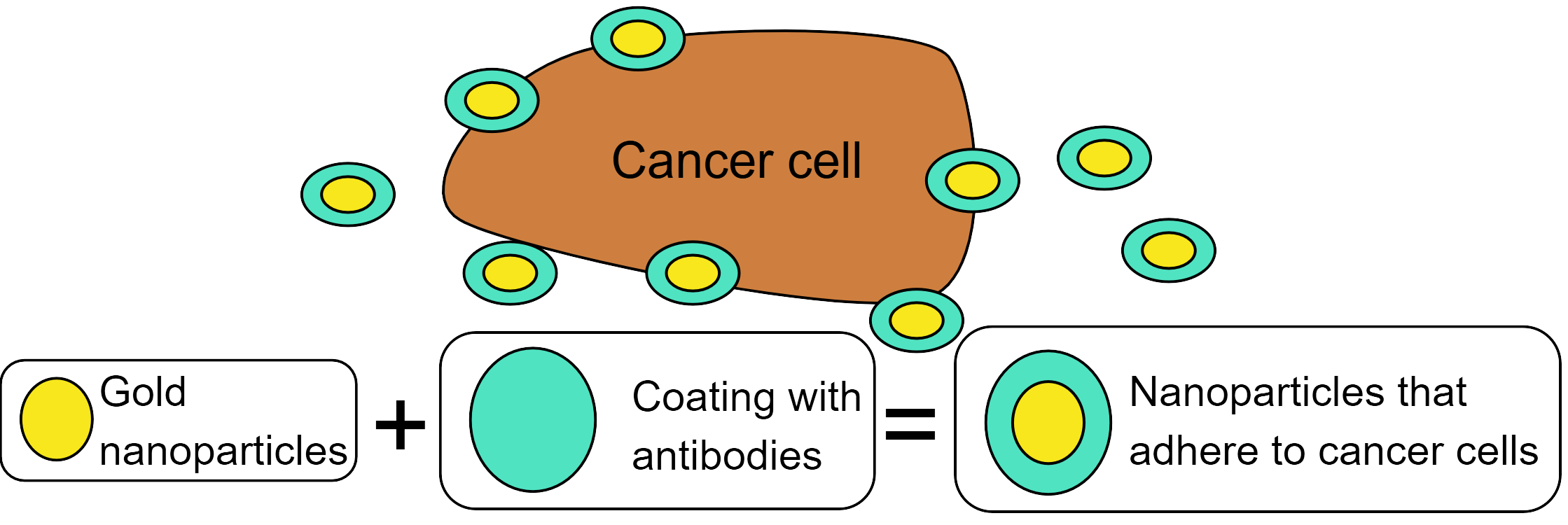
Nanoparticles targeting cancer

Illustration of the previous paragraph

After the nanoparticles have successfully attached to the cancer cells, how do we detect them? This is where lasers and a bit of physics come into play. To understand how we detect gold nanoparticles, imagine directing a laser at a piece of gold and a cancer cell. When the laser strikes both the gold and the cancer cell, they heat up as they absorb some of the laser’s energy. This heating causes vibrations around them, and it’s these vibrations that we can measure using a widely known technique called ultrasound [4]—the same method used to monitor babies during pregnancy.

The interesting part is that gold and cancer cells are different materials, meaning they have distinct properties. Specifically, gold, being a metal, is a better conductor of heat than cancer cells. This causes it to absorb more energy from the laser and generate stronger vibrations than the cancer cells, allowing us to observe these intense vibrations through ultrasound.
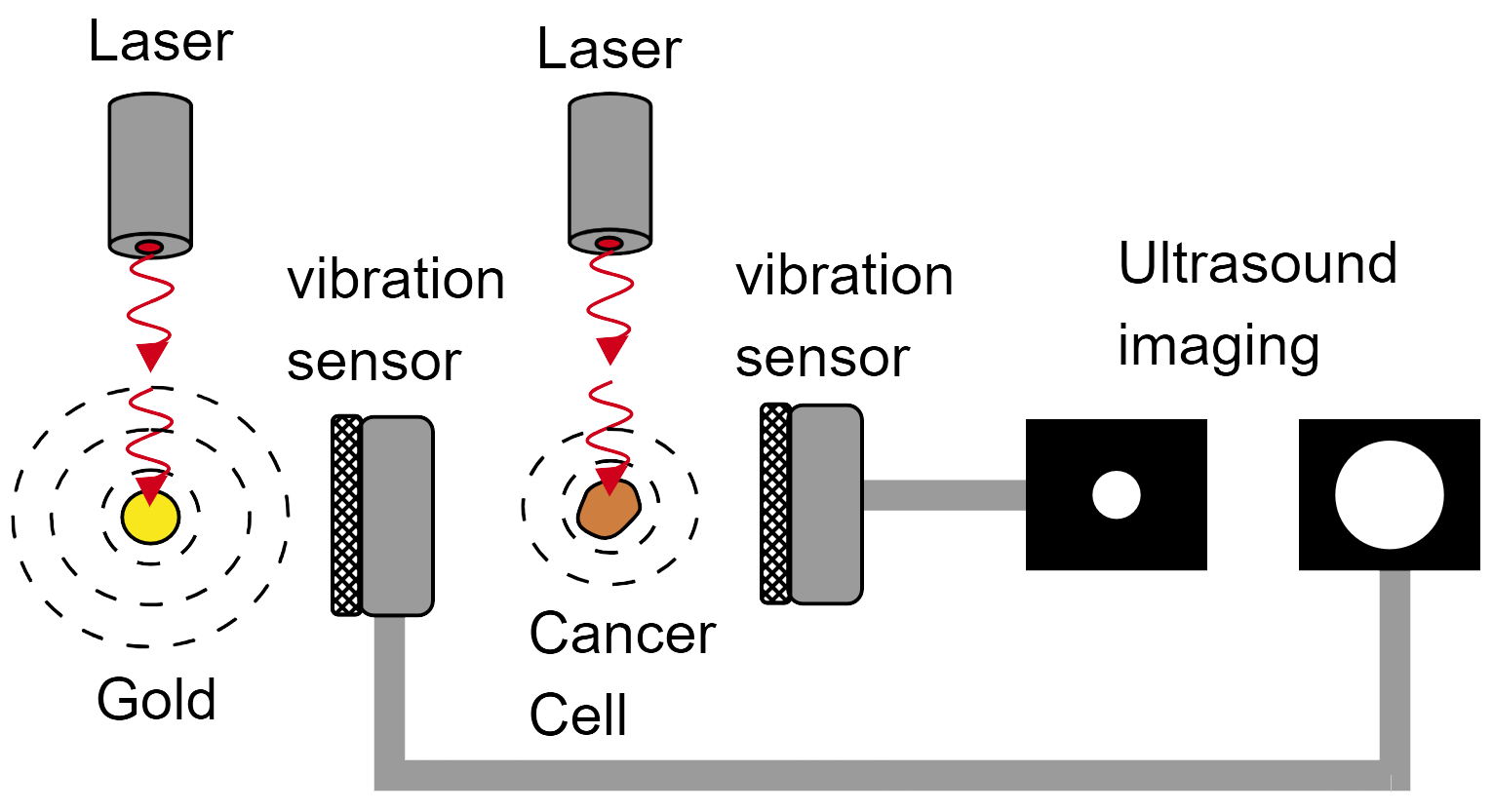
Photoacoustic ultrasound detection

Fig. 3: Since gold nanoparticles generate stronger vibrations than cancer cells, this will appear as a brighter spot in an ultrasound image.

With this, I hope I’ve convinced you that we can use gold nanoparticles to detect cancer cells. However, if we analyze this in detail, we’re oversimplifying things into an ideal case where only gold nanoparticles and cancer cells exist. The reality is that in real tissue, other components like skin, blood, water, fats, and many others are also involved[5]. Moreover, there are lasers of many colors—red, blue, green—and some emit light that our eyes can’t see, like ultraviolet and infrared. Could the color of the laser affect anything? The answer is yes[4], and this is where physics and math start to get complicated, but also quite interesting. But why am I telling you all this complicated stuff? Well, this is where my love for mathematics comes into play.

My role in this research area

The most efficient way to detect gold nanoparticles remains an open research question, as there is no single solution. In fact, different mathematical algorithms can be employed, each with its own set of advantages and disadvantages.

Knowing I’m a math enthusiast, on June 7, 2023, my supervisor, Dr. Diego Dumani, an expert in bioengineering, challenged me to use my knowledge to develop a new method/algorithm for detecting these gold nanoparticles.

The challenge was a long process filled with setbacks. However, I have now developed a solution that appears to be viable—or at least, that is what the computer simulations suggest.

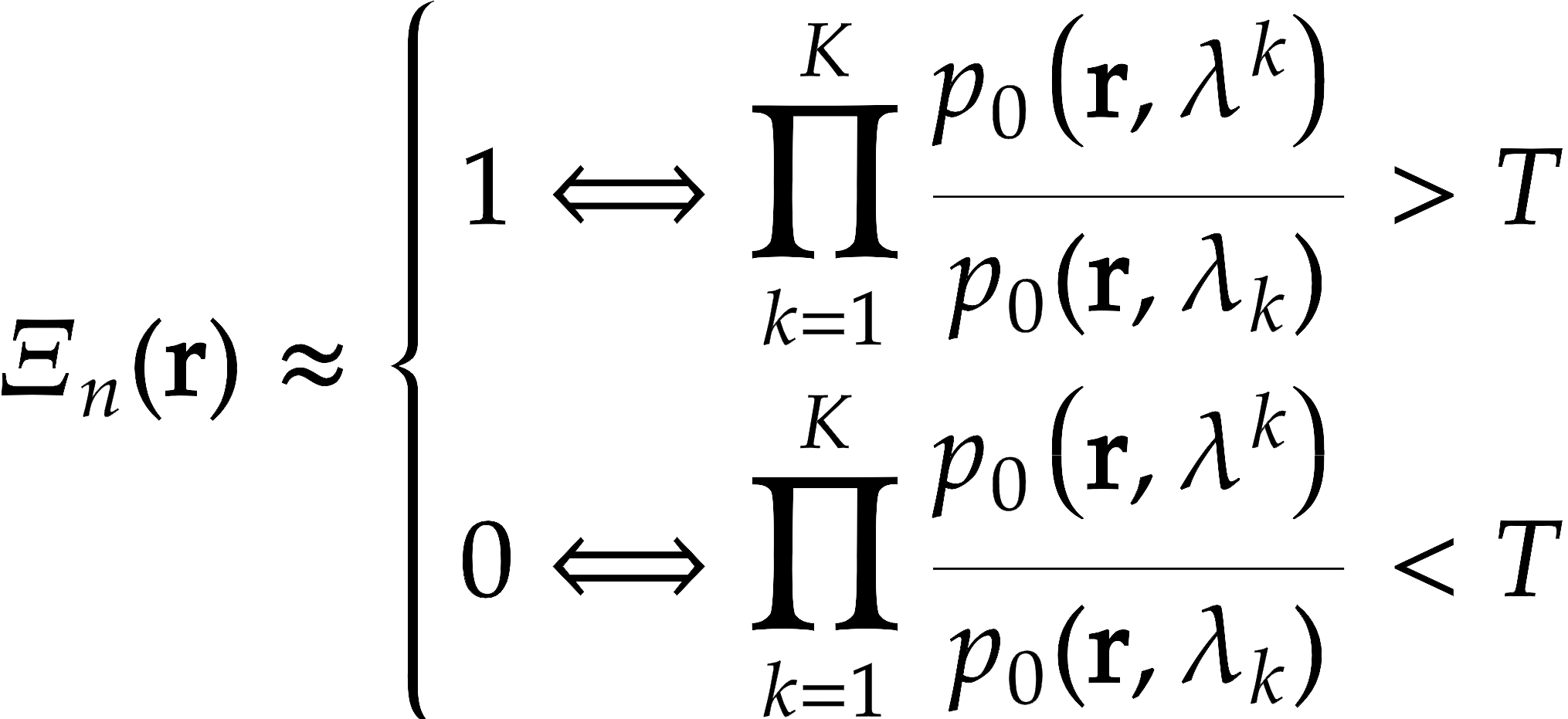
Math equation of algorithm

This collection of strange symbols is the summary of more than a year and a half of research aimed at optimizing metastasis detection using lasers and gold nanoparticles.

Now, why create a new algorithm if scientists have already worked on this problem? In the studies I’ve reviewed, the most common methods can be grouped as “solutions to linear regression models with numerical analysis”[4], [6]. But since that name is quite complicated, we will refer to them as “typical methods.”

My new algorithm aims to make everything faster and cheaper compared to the “typical methods,” even if it sacrifices a small amount of accuracy.

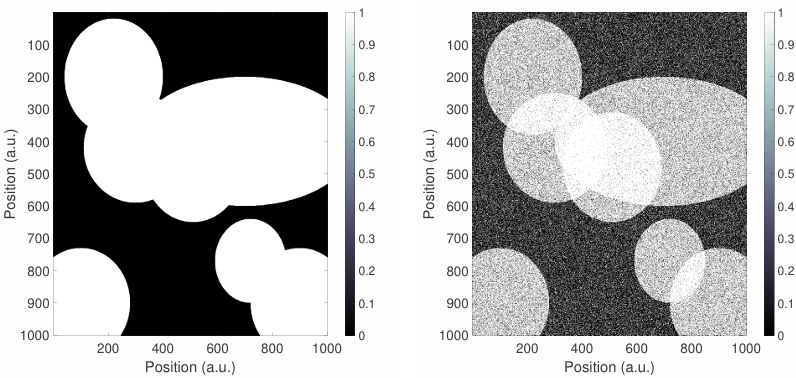
Comparison of detection methods

The image on the left shows nanoparticle detection using the “typical methods,” while the image on the right shows nanoparticle detection using the method proposed by me.

As mentioned earlier, my method/algorithm reduces costs because the “typical methods” require lasers of multiple colors (at least four), whereas my method only needs two. Additionally, it saves time since the “typical methods” require a study of the individual’s vein arrangement, which varies from person to person. In contrast, my method eliminates the need for this step.

Of course, these time and cost benefits have to come at a price, right? Well, if you take a close look at Figure 5, you can see that the image from my method looks a bit more blurred. But I don’t know, I’d say they look pretty similar, haha.

With this, I conclude the best summary I can offer of what I consider my humble contribution to the scientific community, without delving too deeply into the technical details. I hope you enjoyed this journey and learned something new!

⚠️ Warning: Technical Details

References

[1] V. Voliani, Gold nanoparticles: an introduction to synthesis, properties and applications. Walter de Gruyter GmbH & Co KG, 2020.

[2] P. Ray et al., “Particle specific physical and chemical effects on antibacterial activities...” Colloids and Surfaces A, 2022.

[3] X. Qian et al., “In vivo tumor targeting...” Nature biotechnology, vol. 26, no. 1, 2008.

[4] B. T. Cox et al., “Estimating chromophore distributions...” Journal of the Optical Society of America A, 2009.

[5] F. Cao et al., “Photoacoustic imaging in oxygen detection,” Applied Sciences, 2017.

[6] S. Kim et al., “In vivo three-dimensional spectroscopic photoacoustic imaging...” Biomedical optics express, 2011.

Robot Project: Line Follower

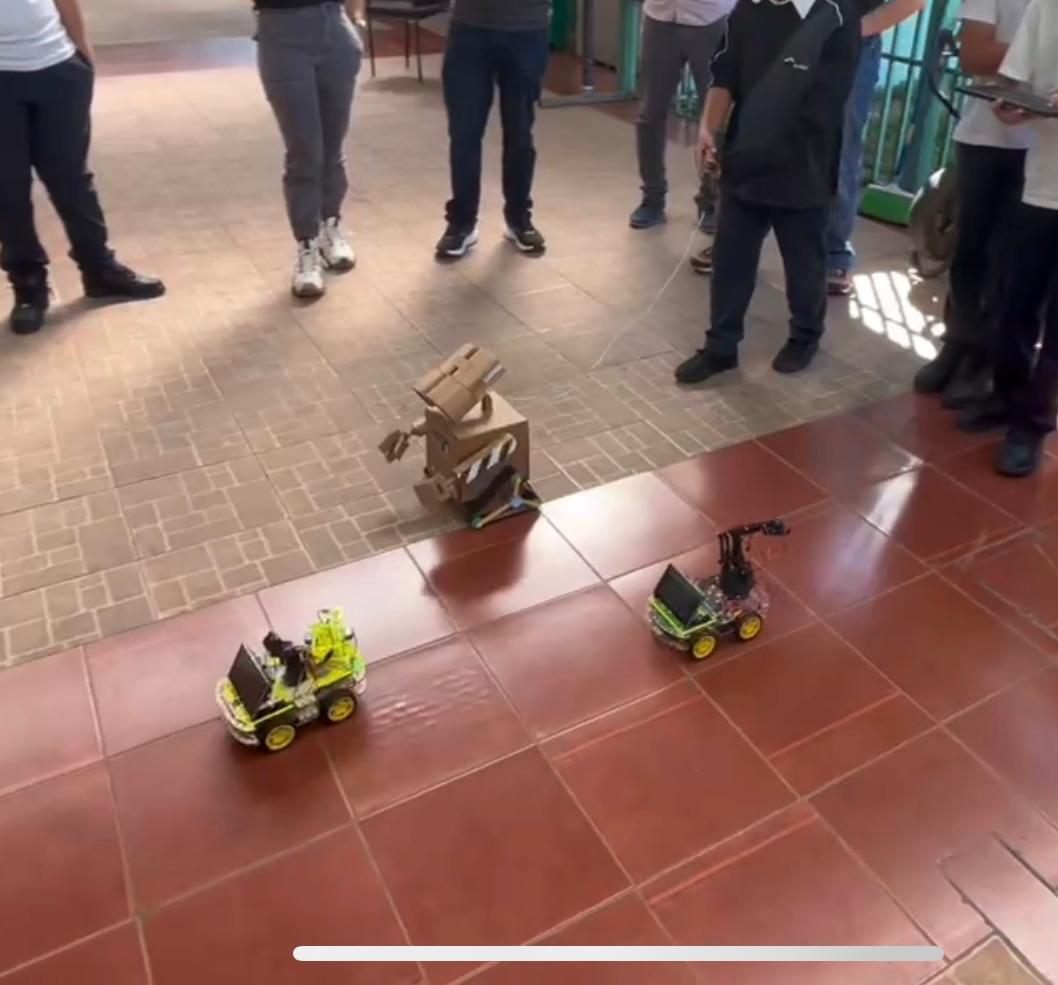
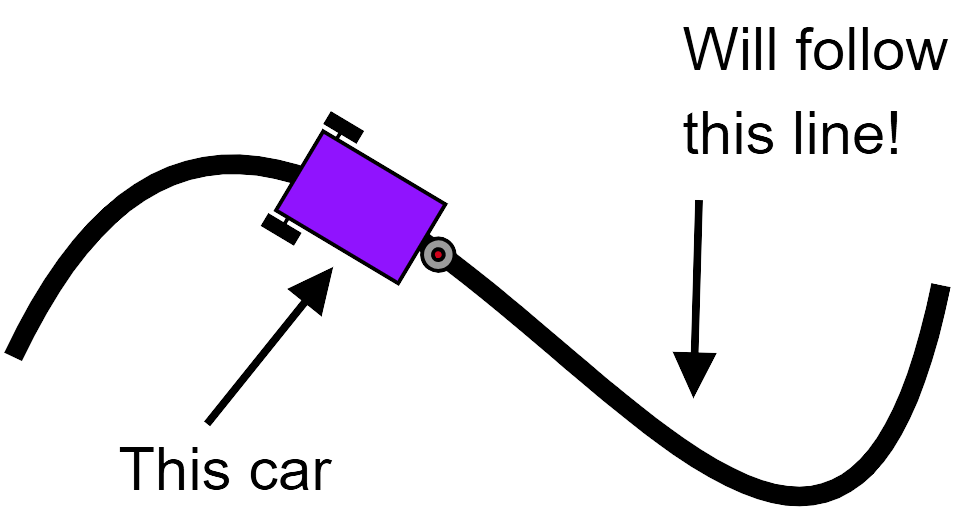
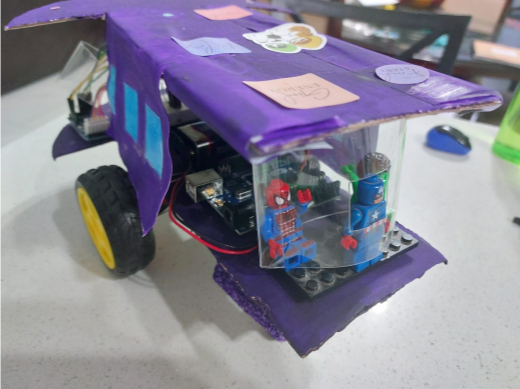
During this semester, I’ve been working as an assistant in a community outreach program at my university called "Tropicalización de la Tecnología". As part of this initiative, I lead several activities with a social impact focus—one of them being the design and construction of a line follower robot to take to schools and inspire children to explore STEM careers.

A line follower robot is a type of autonomous machine that follows a predefined path on the ground—typically a black line on a white surface or vice versa. It uses sensors to detect contrast and make decisions in real time to stay on course.

Robot seguidor de línea

Robot designed for community outreach activities in schools, promoting interest in STEM careers.

A line follower consists of five key components, which we will explore below.

Inside the Line Follower: Core Components

1. Development Board

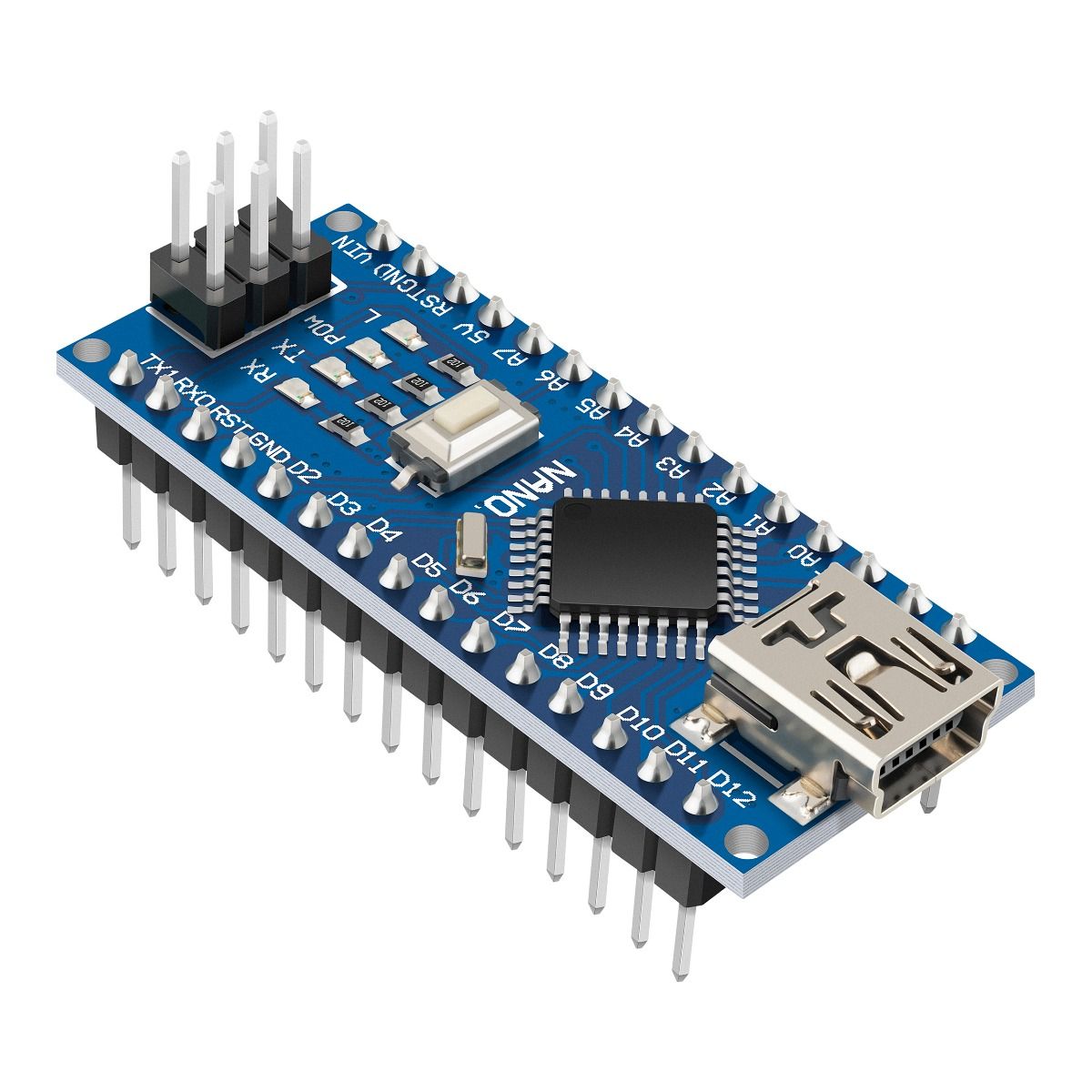
This component is the brain of the project. It’s a programmable system that interprets the code and sends instructions to control the rest of the robot. For this project, we used an Arduino Nano as the development board.

Arduino Nano

Arduino Nano used as the programmable brain of the robot.

2. Line Follower Sensor

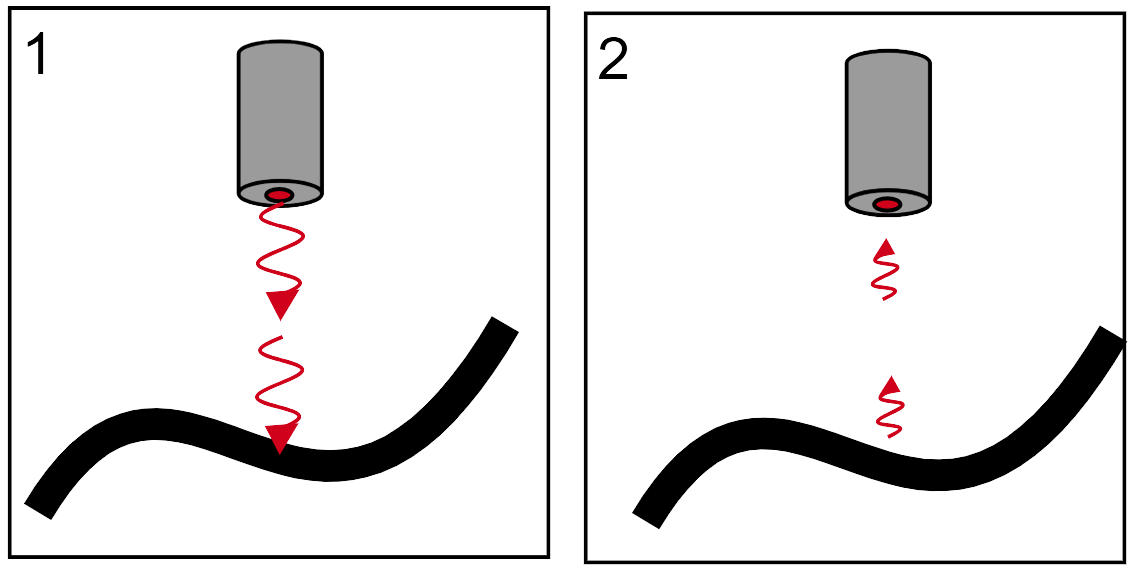
A line sensor is the component that helps the robot detect the path drawn on the ground—it's like the robot’s eyes. The sensor works by emitting infrared light toward the surface and detecting how much of it is reflected back. If the surface is white (or light-colored), more light is reflected. If it’s black (or dark), the light is absorbed and much less is reflected.

Line Follower Sensor

Infrared sensor that allows the robot to detect and follow the line.

3. Stepper Motors

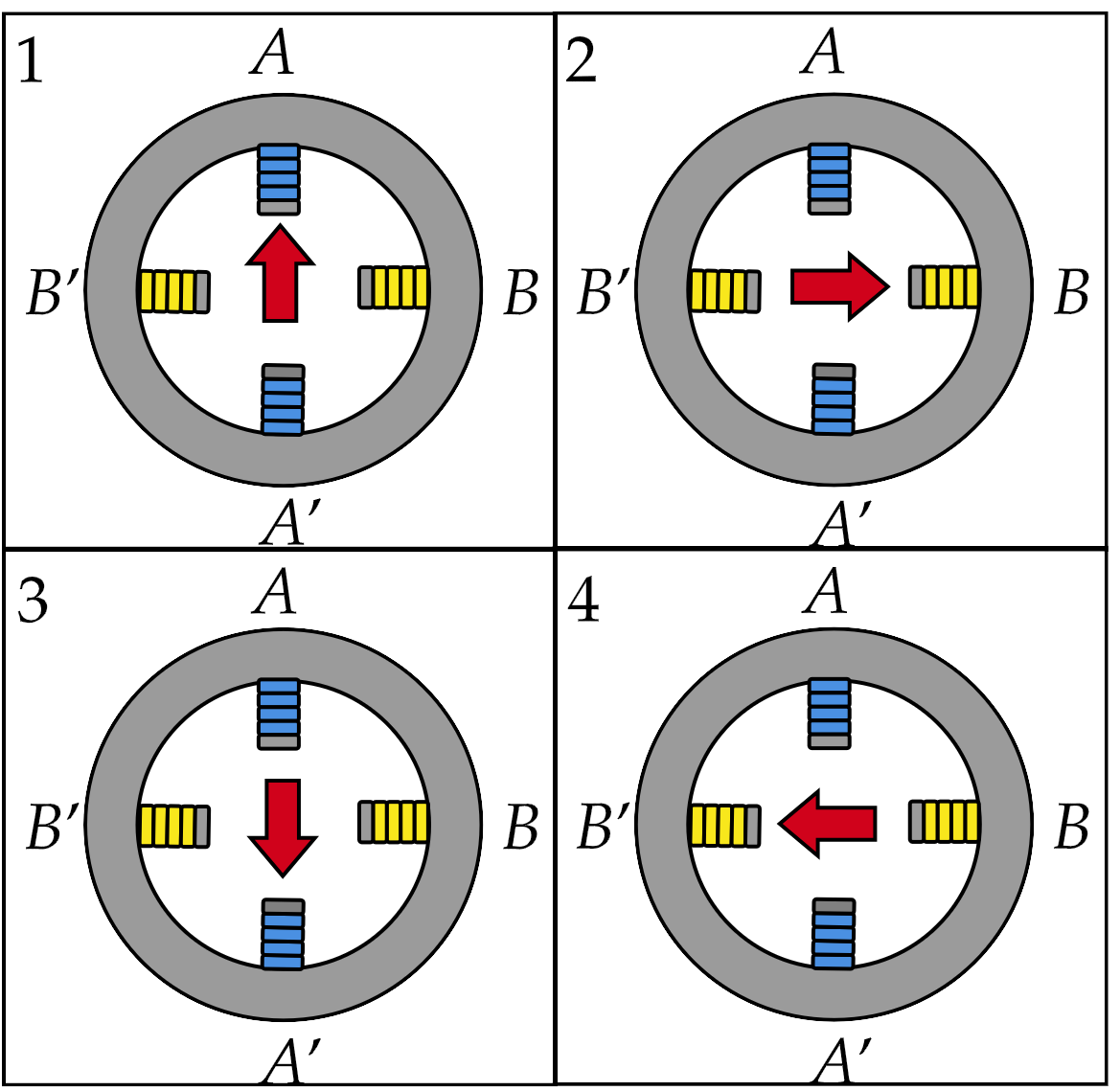
Stepper motors are responsible for the movement of the robot. Unlike regular motors that spin freely, these rotate in precise steps, which allows us to control the position and direction with great accuracy. In this project, each stepper motor is used to drive one of the wheels, making the robot capable of following the line with smooth and controlled movements.

Motor paso a paso

The figure illustrates how a stepper motor rotates in 90° steps by sequentially energizing four coils—A, B, A′, and B′—one at a time.

4. Current Amplifiers (Drivers)

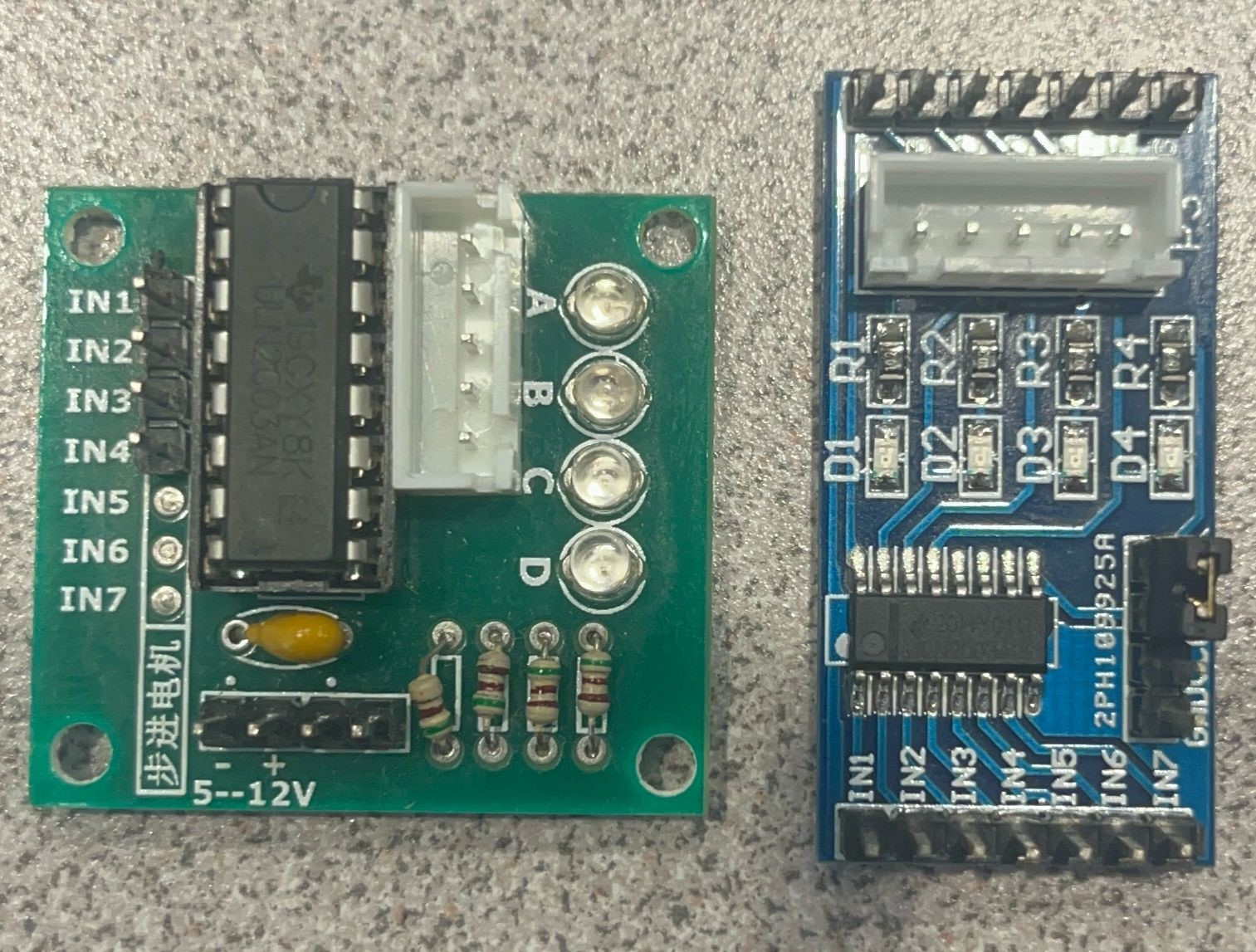
Stepper motors require more current than the Arduino Nano can provide. That’s why we use current amplifiers, also known as drivers. These components take the low-power signals from the development board and amplify them to provide enough power for the motors to operate safely and effectively.

Drivers

Real-life example of current drivers used to power the robot's stepper motors.

How the Robot Works

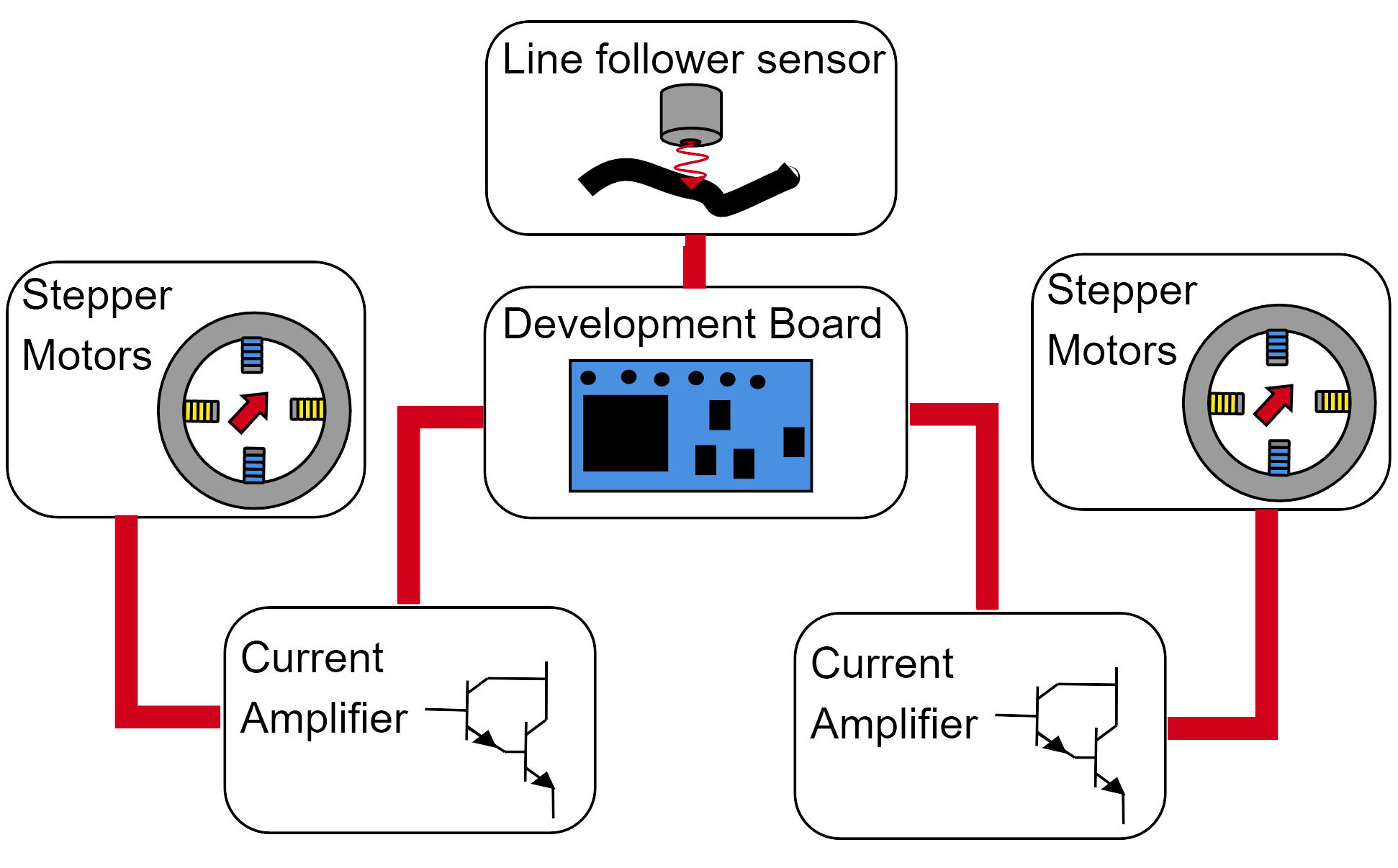
The robot works as follows: the line sensor detects where the black and white surfaces are and sends that information to the development board—its brain. The brain then processes this data and tells the wheels (stepper motors) how they should turn to follow the line.

Connection diagram

Diagram showing how all components are connected and interact.

You can think of it like a human body: the sensor acts as the eyes, detecting where the line is. This visual information is sent to the brain (the Arduino), which decides how to respond. Finally, the brain gives instructions to the feet (the wheels), telling them where and how to move.

Project Progress

To achieve the final goal of building a working line follower robot, I divided the project into three key task blocks. Each block represents a phase of the development process, from understanding components to coding and integration. We are currently working on the third block.

1. Initial Testing

• Test stepper motors
• Understand connections between current drivers and motors
• Understand connections between the development board and drivers
• Understand sensor-to-board wiring
• Propose a prototype layout

2. Coding and Structure

• Implement code to control stepper motors
• Implement code to read reflected light from the line sensor
• Print a 3D model to support all components

3. Integration and Control

• Mount all components in one chassis
• Implement a control system to steer the robot based on sensor readings
• Design test paths for the robot to follow

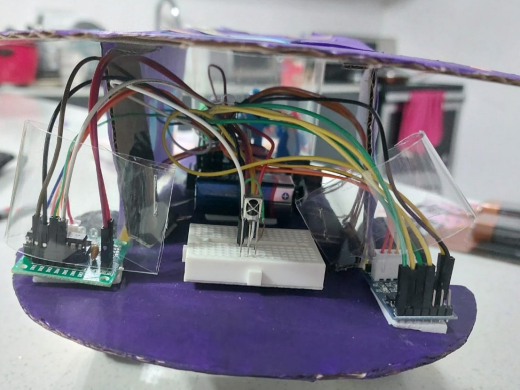
Line follower prototype 1 Line follower prototype 2

Photos of the current prototype under development.

📄 View Full Construction Manual

Drawing with Energy and Frequency

This project explores how sound can become art. By capturing the electrical signal from a guitar, we use both its energy and frequency to generate real-time visual patterns. The goal is to transform music into dynamic visual representations—bridging physics, engineering, and creativity.

Guitar signal art project

A visual representation based on the energy and frequency of a guitar signal.

Live demo of the guitar-to-art system in action.